HomeGPS Trackers & Virtual Fences
PetSafe Guardian GPS 2.0 Review: A Cheaper GPS Fence, With Trade-Offs
At $379.99 plus a plan, PetSafe's Guardian GPS 2.0 undercuts Halo on price and promises a small collar and long battery. Independent tests under trees and conflicting spec sheets keep it from an easy recommendation.
Our verdict
A credible budget GPS fence for a dog on open, flat land, with a small collar and a long battery by the maker's figures. It is not a safe pick for a wooded property: one independent test saw it fail to deliver any boundary feedback in 2 of 5 trials under dense tree cover. Pay for a plan, check the spec sheet for your dog's size, and keep a leash on hand until you trust it.
- Best for
- Dogs on open yards of half an acre or more
PetSafe has sold pet fences for decades, so a GPS fence from the brand is no surprise. What matters is whether the Guardian GPS 2.0 closes the gap with Halo and SpotOn at a lower price, or just charges less for less.
The short answer is mixed. The numbers on the maker's page are good, the independent test we found is bad for dense tree cover, and the spec sheets on third-party sites disagree with the maker on basics. We say which source each figure comes from.
What the maker's page says
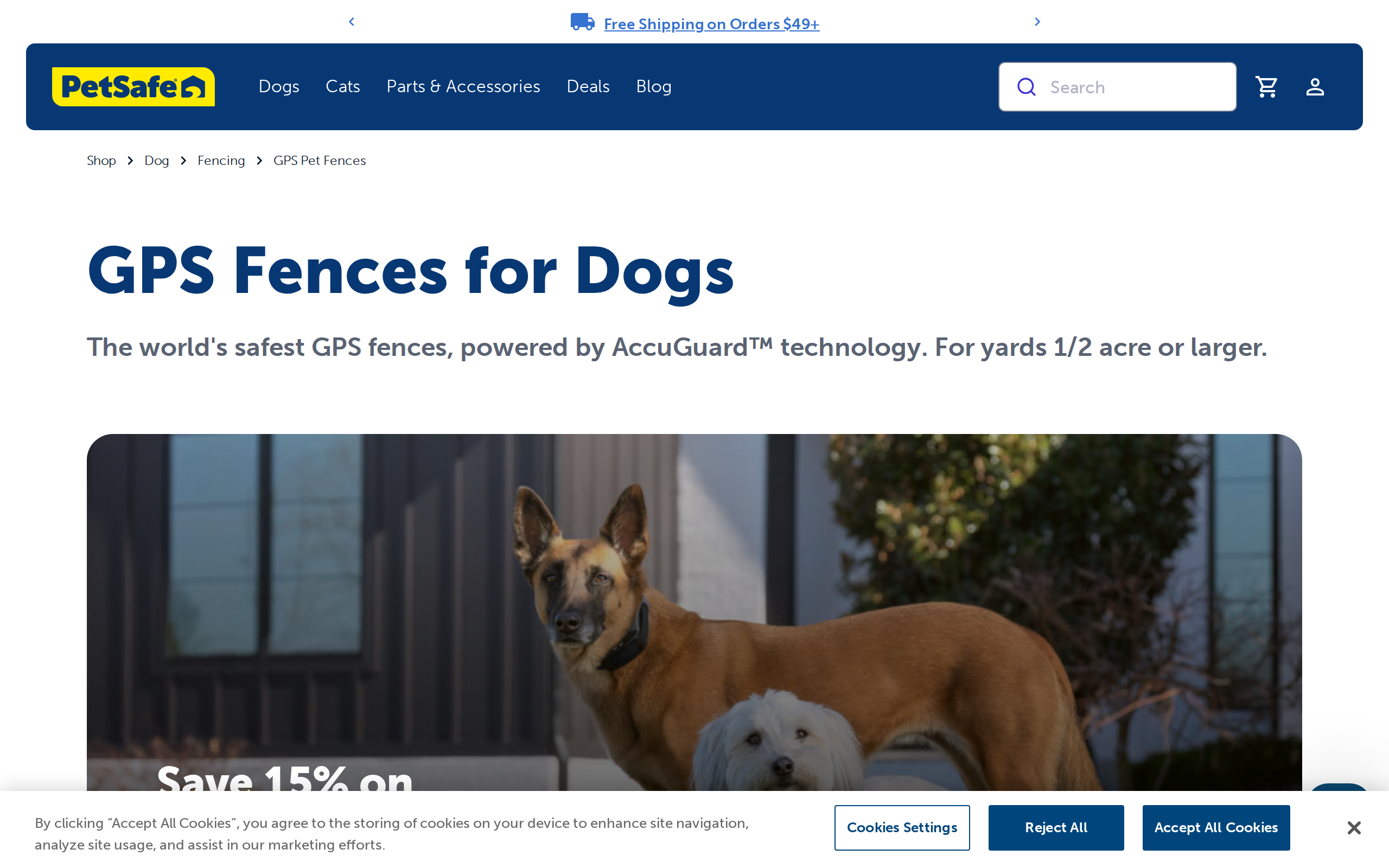
The Guardian GPS 2.0 costs $379.99 in the buy box. The collar combines dual-frequency GPS with what PetSafe calls AccuGuard, which mixes GPS data with motion detection. Correction runs through a tone, a vibration and ten static levels. The collar is waterproof, rechargeable, sized for necks from 8 inches and rated for up to 70 hours per charge.
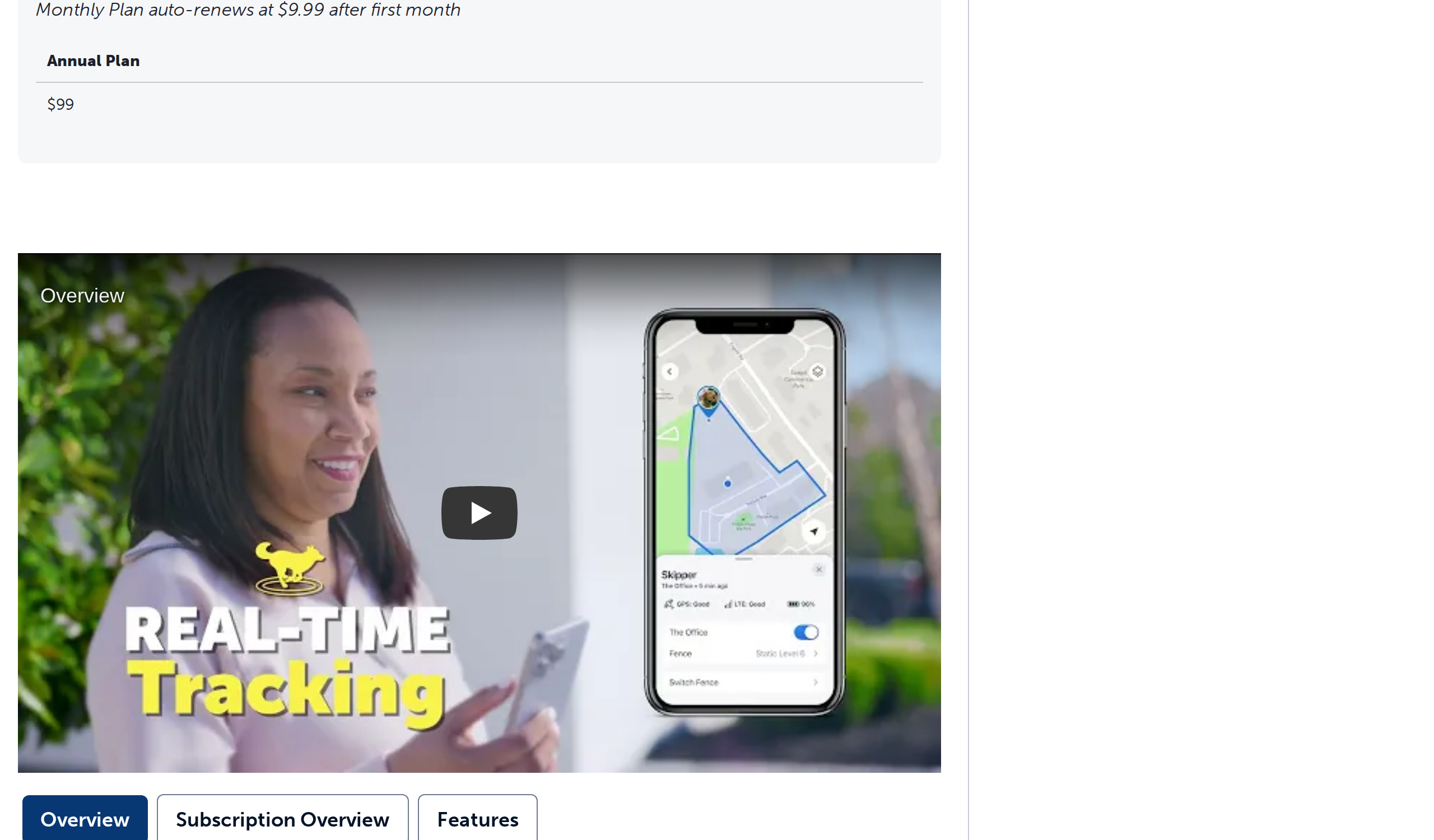
Fences are drawn in the My PetSafe app rather than by walking the boundary. The maker says the collar stores up to 50 fences and that setup takes 1 to 2 hours. The collar needs cellular service for GPS and 2.4 GHz Wi-Fi for setup and updates.
The plan changes the sum
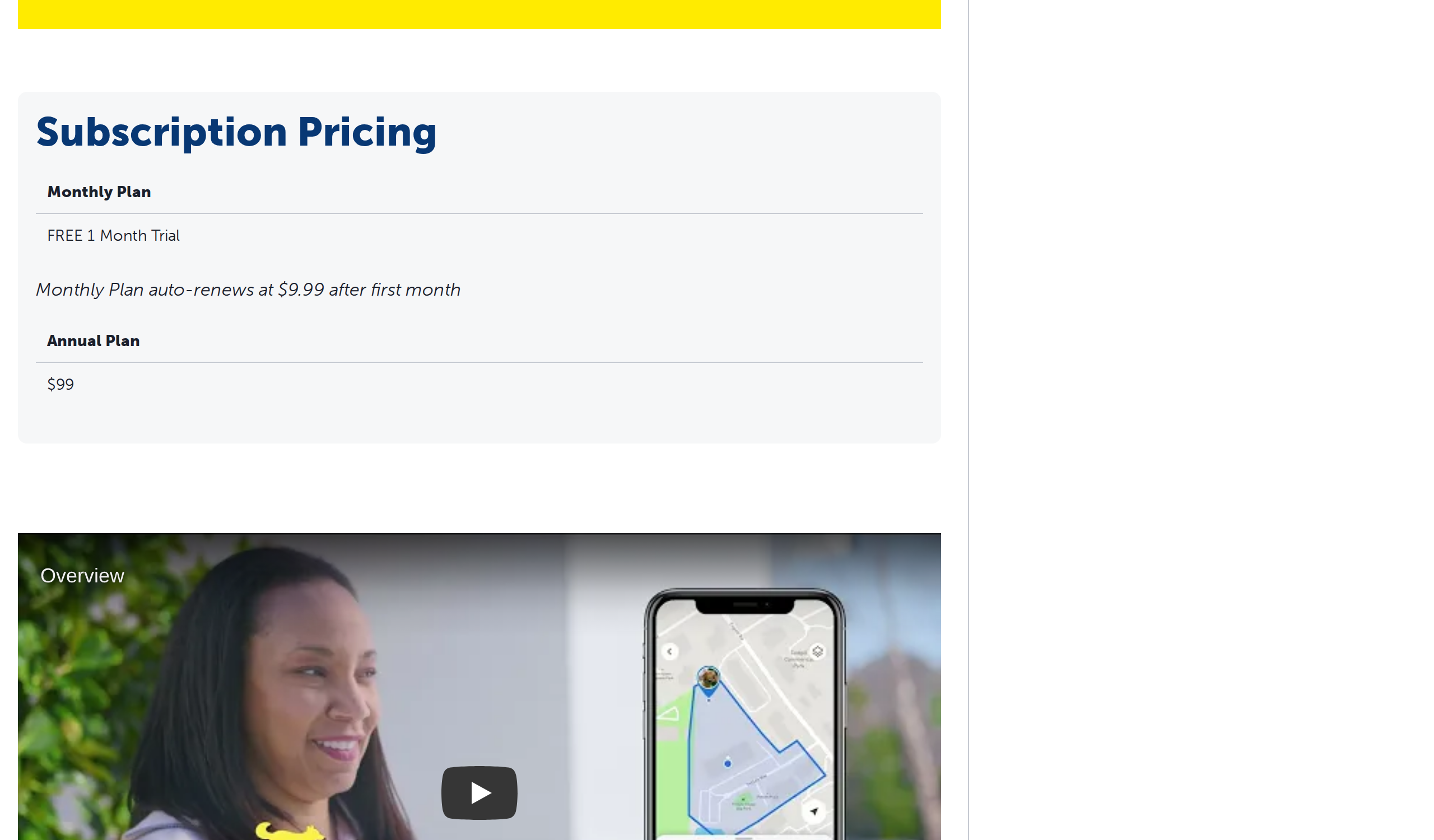
The hardware price is only part of it. The page lists a free first month, then $9.99 a month or $99 a year. Over two years on the annual plan that is $379.99 plus $198, or about $578. One comparison site quotes an annual plan of $89 and another claims no subscription is needed at all. The maker's page says otherwise, and containment features need the cellular link, so plan on paying.
For context, comparison coverage places Halo collars well above this price, and SpotOn's Omni Edition is reviewed on this site as a no-plan alternative. Check both before you buy, because prices and plans move often.
The tree-cover problem
Pampered Pup ran five boundary trials under dense tree cover, walking a rope perimeter and flagging where feedback arrived. The Guardian gave no boundary feedback at all in two of the five trials, a 40% failure rate. On the three trials that worked, the correction point drifted between +8.75 inches and -96.5 inches from the line.
That is a small test, and the same site compared it with a competitor that did not fail. It does not prove the collar fails in your yard. It does tell you what to check: if your fence line runs under mature trees, treat any GPS fence as unproven until you have watched it work on a leash.
The same review noted a two-stage warning (alert, then correction) and no intermediate vibration step. That is worth knowing if you prefer a gentle approach, though the maker's page lists vibration as a separate mode.
Whose numbers do you trust?
Three details differ between sources:
Saved fences: the maker says 50, one review says 20.
Minimum dog weight: the maker says 10 lb or more, one site says 30 lb.
Minimum property: the maker says half an acre, one site says three quarters.
When specs conflict, the maker's current page is the best starting point, but ask PetSafe support in writing before relying on the small-dog or small-yard claims. A fence collar is a safety device and a wrong guess has a real cost for the dog.
How we would run the 45-day trial
Treat the return window as a test period, not a grace period. Map the fence in the app, then walk your dog toward each edge on a leash and note where the tone starts and where the first correction lands. Repeat it under the trees, on a cloudy day and after the collar has been on for an hour. If the warnings arrive late or not at all in any spot, return it before the window closes. The warranty page spells out the terms, and buying direct from PetSafe keeps that simple.
Who should buy it
A dog on a flat, open lot of half an acre or more, an owner who wants a lower sticker price than a Halo, and a household willing to treat the first few weeks as a supervised trial.
Who should skip it
Anyone with a small yard, a wooded boundary or a dog under the weight limit. Skip it too if you cannot tolerate a monthly fee: a plain tracker or a fence with no plan is a better fit.
We rate the Guardian GPS 2.0 at 6.2. It is cheaper than the best in class and the feature list is full. The evidence for its reliability is thinner than its price suggests.
What we liked, and what we did not
Pros
- $379.99 hardware cost sits well under Halo's collars
- Tone, vibration and ten static levels give a gradual warning
- Maker lists up to 70 hours of battery and a waterproof collar
- Stores up to 50 virtual fences per the maker's page
- 45-day satisfaction guarantee with returns
Cons
- Subscription is required: $9.99 a month or $99 a year after a free month
- Needs a yard of half an acre or larger for the fence to work well
- One test saw no boundary feedback in 2 of 5 trials under dense trees
- Third-party sites quote different fence limits and minimum dog weights
- Setup uses 2.4 GHz Wi-Fi and a phone app, with 1 to 2 hours to map a boundary
Specifications
- Price
- $379.99, plus subscription
- Subscription
- Free first month, then $9.99 a month or $99 a year
- Minimum property
- 1/2 acre or larger
- Saved fences
- Up to 50 (maker); some sites say 20
- Correction
- Tone, vibration, 10 static levels
- Battery
- Up to 70 hours (maker)
- Smallest neck
- 8 inches
- Minimum dog weight
- 10 lb or more (maker); some sites say 30 lb
- Connectivity
- Cellular for GPS; 2.4 GHz Wi-Fi for setup
- Return window
- 45-day satisfaction guarantee