PetPace Smart Collar 3.0 Review: Vital Signs for Senior Dogs
PetPace 3.0 tracks pulse, temperature, respiration and stress, and bundles GPS and 24/7 vet chat into a mandatory plan. We checked whether that is worth paying for with an older or chronically ill dog.
Our verdict
For a senior or chronically ill dog, PetPace 3.0 is the only consumer collar we found that reports real vital signs and ties them to a veterinarian you can message at any hour. The plan is mandatory and costs $200 to $300 a year, accuracy drops when a dog moves, and the alerts are a prompt to call your vet, never a diagnosis. Worth it for the right dog, wasteful for a healthy young one.
- Best for
- Senior or chronically ill dogs under a vet's care
Most dog wearables count steps and sleep. A step count will not tell you much when the dog in question is thirteen, on heart medication, and has started breathing a little harder at night. That is the niche PetPace 3.0 is built for, and it is a different product from the GPS tags and activity bands we usually review.
What you pay, in plain numbers
The collar is $299 on sale and $399 list. The plan is not optional, because the vitals, GPS and vet access all run through it. PetPace's product page lists three terms:
1 year: $25 a month ($300), then $200 a year.
2 years: $16.70 a month ($400 total), then $200 a year.
3 years: $13.90 a month ($500 total), then $200 a year.
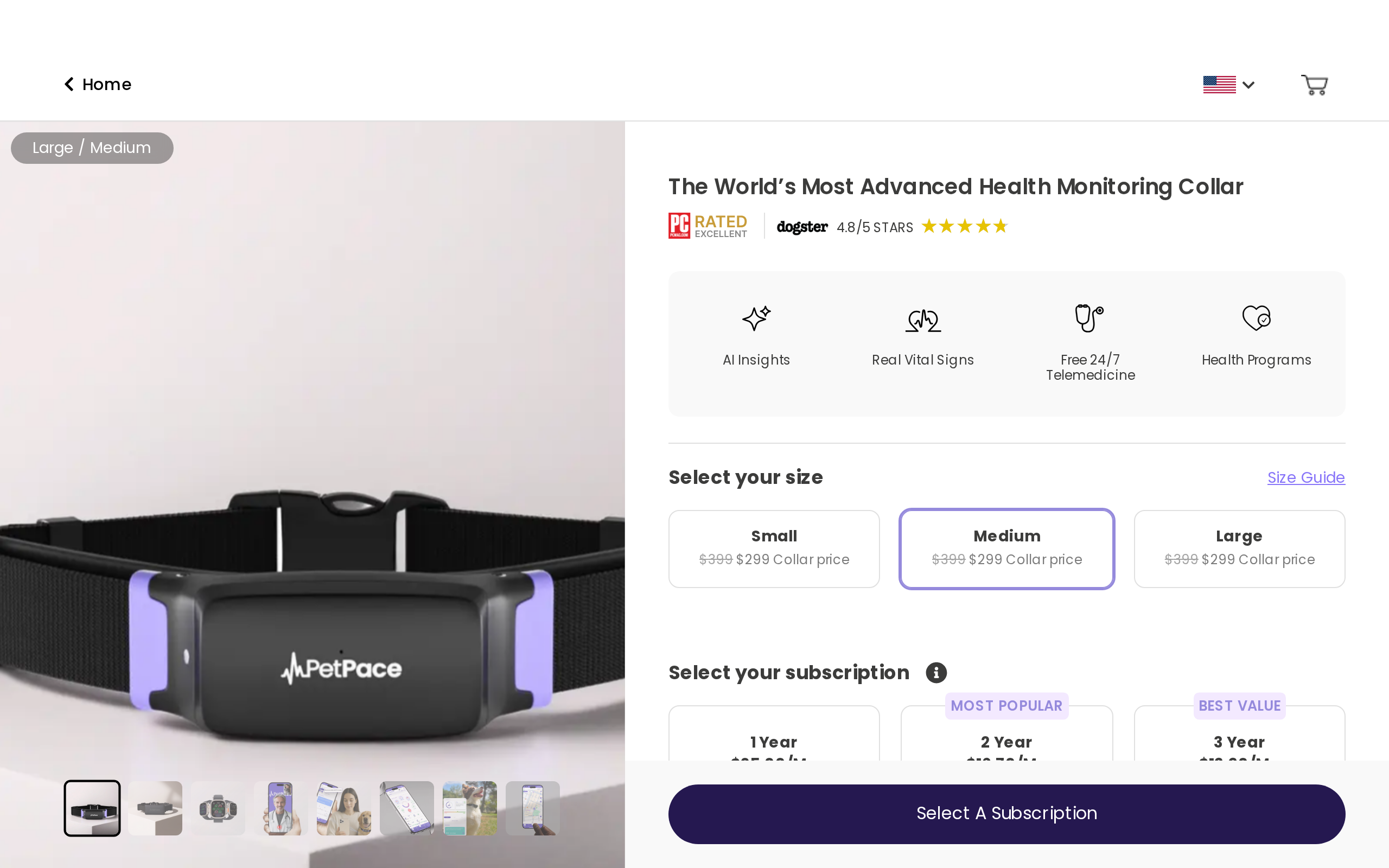
So the first year costs about $600 with the sale collar and the shortest plan. Longer terms cut the monthly figure but lock the money in up front, and a dog with a serious illness is exactly the case where you may not want to commit for three years. We would take the shortest term first. Note that this is higher than the "from $349" starting price we were given, and the page figures are the ones we trust.
The vitals, and the accuracy caveats
Where PetPace differs is the sensing. It reports pulse, temperature, respiration rate, stress level through heart rate variability, a pain score and fitness data, then compares each reading with that dog's own baseline and breed. The homepage claims it is the only collar that measures real vital signs and the only one detecting pain in dogs; we cannot verify a "only" claim, and it is marketing language.
Independent measurement is thinner than the marketing. One review site reports that pulse and respiration are far more reliable at rest than during a walk, and that thick fur can hurt temperature readings. Treat that as plausible rather than proven, since it is a single secondary source, and it matches how contact sensors behave. The practical lesson is that overnight and resting trends are the useful data. A reading taken mid-fetch is not.
Why a senior dog is the right buyer
PetPace markets a use case for older dogs: baseline drift in breathing rate, resting heart rate or sleep that can signal a problem before an owner sees one. One review reports a respiratory infection flagged about 36 hours before visible symptoms. That is one anecdote, and we would not buy on it. The real value is subtler: if your vet has asked you to log resting breathing rate for a heart patient, the collar does it for you, every night, and hands you a graph.

The plan also includes unlimited telemedicine with vets at any hour. For an anxious owner of a dog with a chronic condition, a message at 2 a.m. is worth real money. It does not replace your own vet, and it is not a promise that anyone will catch everything.
Questions to ask before you pay
Ask your vet two things first. Would resting respiration or heart rate trends change how they manage your dog? And would they look at an exported report? A collar nobody reads is an expensive necklace. Then look at the dog: a nervous dog that hates wearing anything may fight a 100 gram unit, and a collar that sits loosely will read poorly.
Set a short test first. The first month tells you how often alerts fire, how many are false alarms, and whether the app's graphs match what you see on the couch.
Living with the hardware
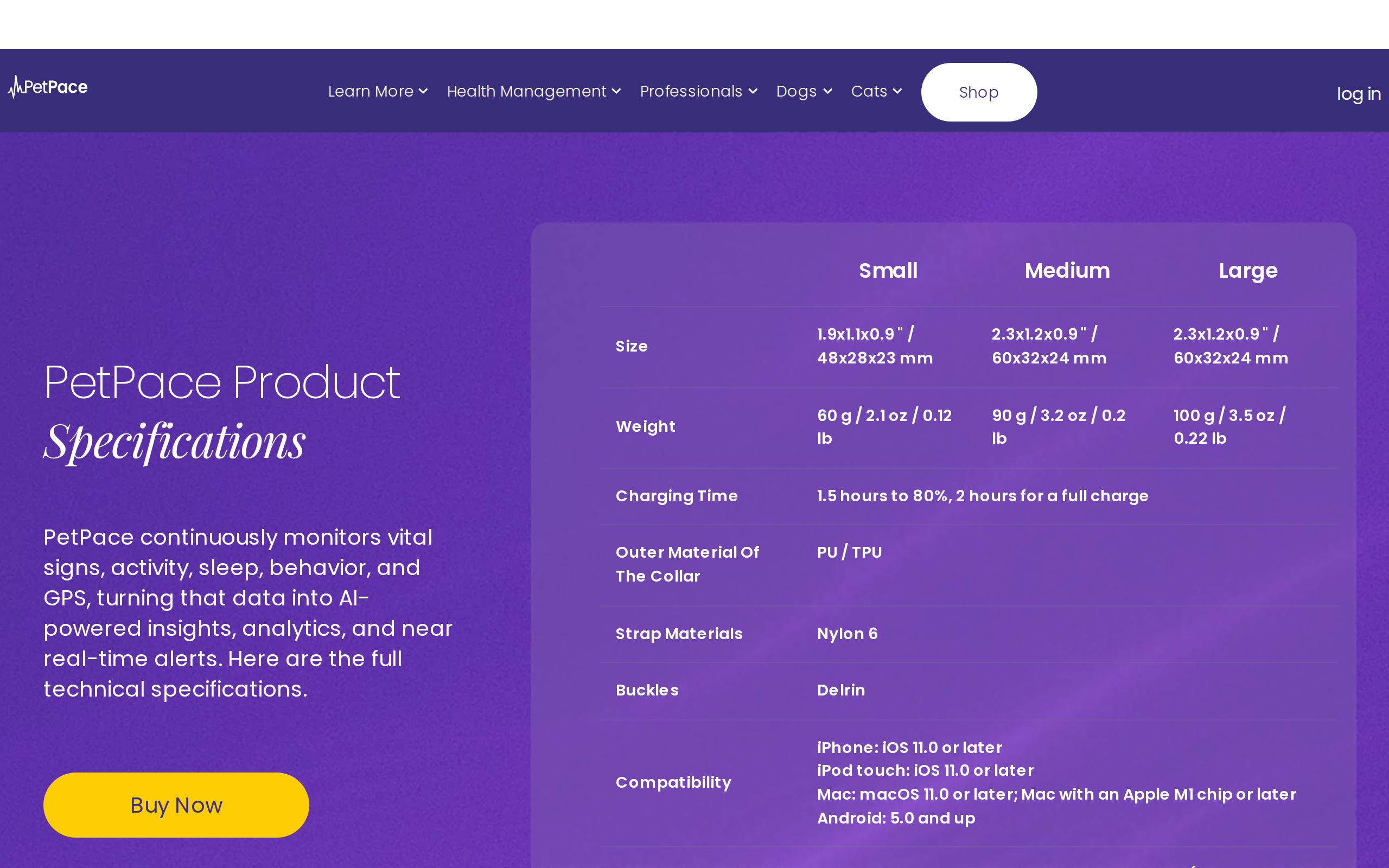
The collar weighs 60 to 100 grams depending on size, charges in about two hours and runs up to three weeks. It carries IP66 and IP68 ratings, Bluetooth, Wi-Fi and LTE, and GPS comes with the plan. Sizes start with a small unit for dogs from 8 pounds, so toy breeds under that weight are out.

The verdict
Buy it if a vet is already watching your dog's heart, lungs or pain, and you want data between visits. A plan that costs about $200 a year after the first can be cheaper than one emergency visit you caught late, though no collar can promise that.
Skip it for a healthy young dog, where a cheap GPS tag covers the actual risk. And never use the app to decide anything about medicine: its alerts are a reason to phone your vet. A 7.6 reflects a strong niche product, held back by the mandatory plan and the thin public testing.
What we liked, and what we did not
Pros
- Tracks pulse, temperature, respiration and heart rate variability, not just steps
- Plan includes GPS, cellular data and unlimited 24/7 vet telemedicine
- Alerts compare against your own dog's baseline rather than an average dog
- Up to 3 weeks per charge and IP66 plus IP68 waterproofing
Cons
- The plan is required: $25 a month in year one, then $200 a year
- Collar costs $299 on sale and $399 list before any plan fee
- Small and medium sizes work only for dogs of 8 lb and up
- Heart and breathing readings are most reliable at rest, and fur can hurt temperature
Specifications
- Price
- $299 sale, $399 list
- Plans
- 1-year $300, 2-year $400, 3-year $500, then $200 a year
- Vitals
- Pulse, temperature, respiration, HRV, pain score
- Battery
- Up to 3 weeks, 2 hour full charge
- Water resistance
- IP66 and IP68
- Connectivity
- Bluetooth 4.2, 4G LTE Cat-M1, Wi-Fi 2.4 GHz
- GPS
- Included with the plan
- Sizes
- Small 8 to 22 lb, Medium 22 to 62 lb, Large 62 lb and up
- Collar weight
- 60 g small, 90 g medium, 100 g large
- Telemedicine
- Unlimited 24/7 vet access, included