Felaqua Connect Review: Can a Water Bowl Warn You About Kidney Disease?
Sure Petcare's microchip-reading bowl logs every drink per cat. We weigh what that data can and cannot tell you, the hub you must buy, and the C batteries.
Our verdict
A useful tool for one narrow job: giving a vet a clean record of how much a specific cat drinks. It needs a hub, four C batteries and a microchip that reads reliably, and it cannot diagnose anything. Worth it for senior or at-risk cats, overkill for the rest.
- Best for
- Senior cats or cats a vet wants watched for thirst changes
Most smart pet gadgets sell convenience. This one sells a number: how much water your cat drank on Tuesday, compared with last month. Whether that number is worth about $115 plus a hub depends on one question, and it is the one this review is built around.
What the bowl actually measures
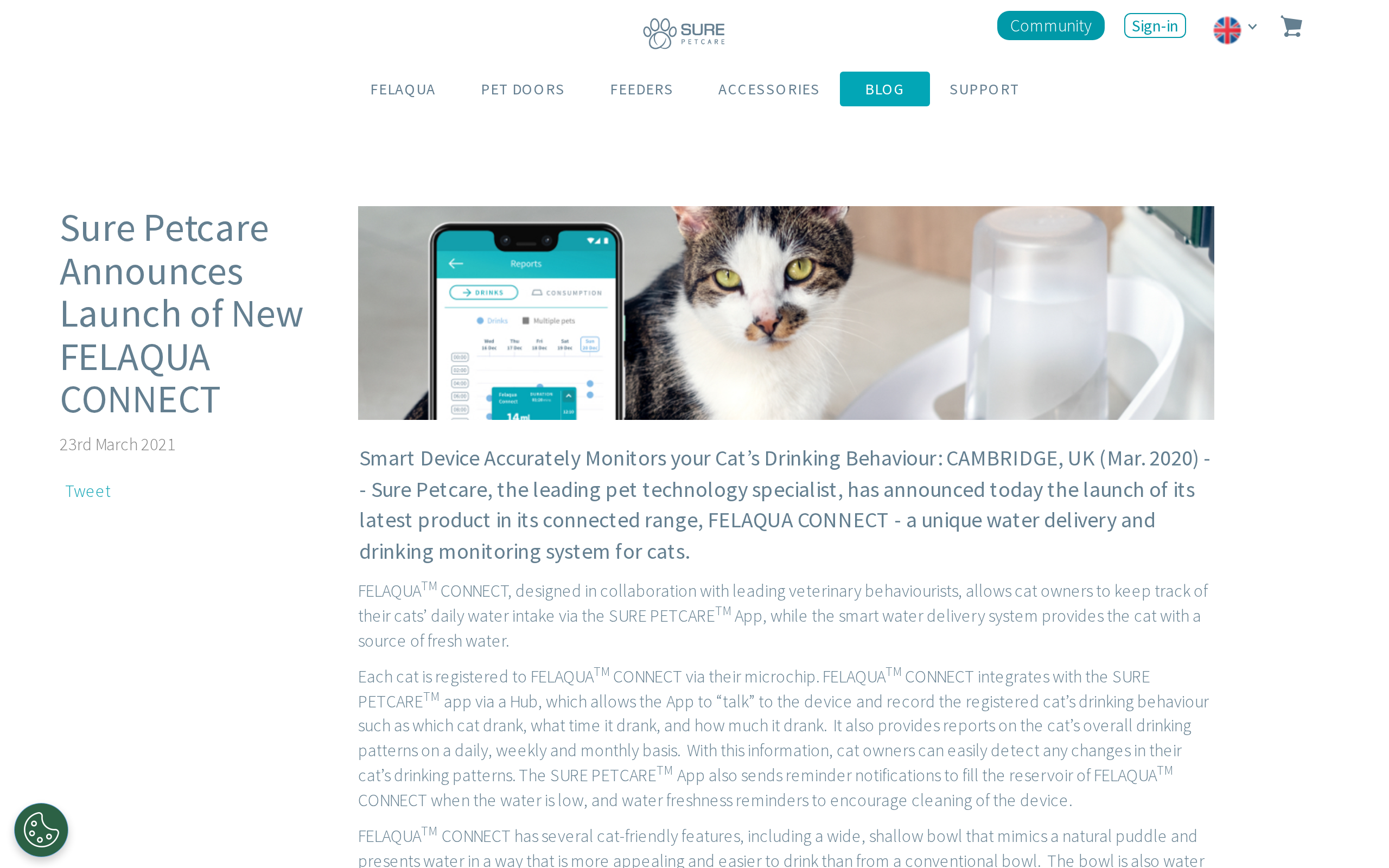
Felaqua Connect is a wide, shallow bowl on top of a 1 litre reservoir. It reads your cat's microchip when the cat dips in to drink, then logs who drank, when, and how much. The maker's page lists frequency, timing and volume per drinking event. Pet tiles in the Sure Petcare app show a daily snapshot, and you can export a PDF report for a vet.
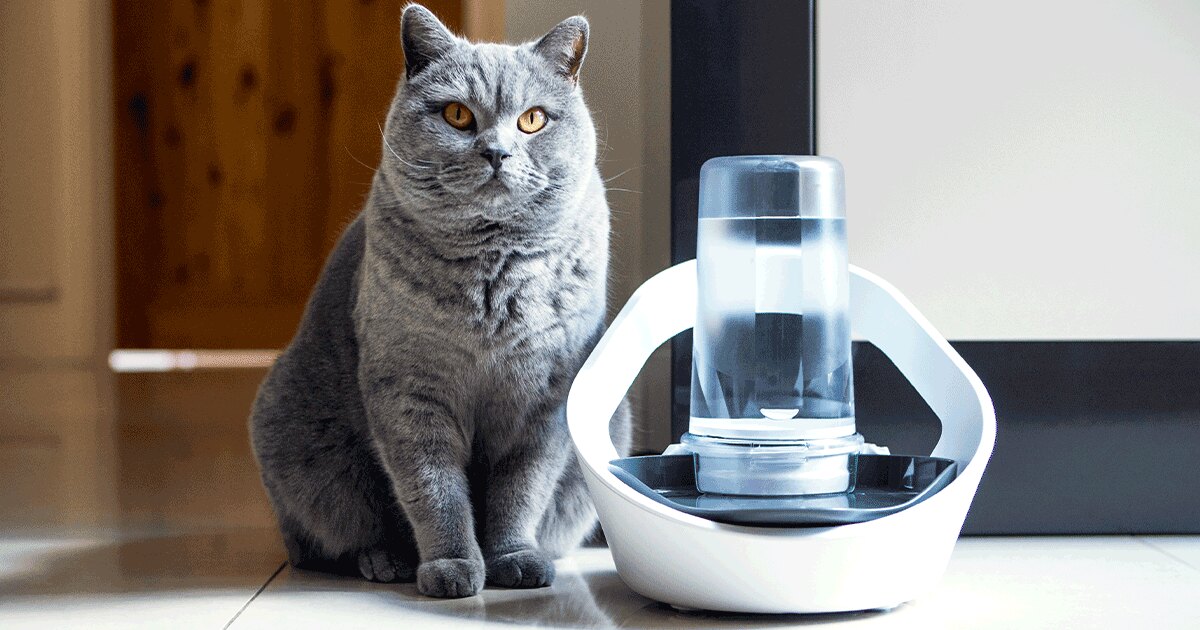
There is no pump, no filter and no recirculating water. That makes it simple to clean, and it also means it is not a fountain. If your cat prefers moving water, this is the wrong shape of product.
Why vets care about drinking
Drinking more than usual is one of the classic early flags for chronic kidney disease, diabetes and an overactive thyroid. Veterinary sources such as dvm360 describe intake above roughly 45 to 50 ml per kg per day as suspect, with 100 ml per kg a commonly used trigger for a full workup. For a 4 kg cat, that is a gap between about 180 ml and 400 ml a day, which is exactly the sort of change a person never notices by eyeballing a bowl.
That is the pitch, and it is a fair one. Sure Petcare says it designed the bowl with veterinary behaviourists, and its launch release quotes one saying accurate information speeds up a diagnosis.
But we want to be plain about the limit. The bowl records water that passes through the bowl. It does not know about the tap your cat licks, the fountain upstairs, or the wet food. We found no published clinical study that tests its volume figures against a lab measurement, so treat the numbers as a trend line, not a measurement. A rising line is a reason to call your vet. It is not a diagnosis, and a flat line is not an all-clear.
The hub and the batteries
Here is where the friction lives. The app only works through the Sure Petcare Hub, which plugs into your router and talks to the bowl over low-power wireless. It handles up to 10 Sure Petcare devices, so it is a better deal if you already own a SureFlap. If you do not, the hub is an extra purchase, and Digital Trends found that its need for a wired router port was off-putting.
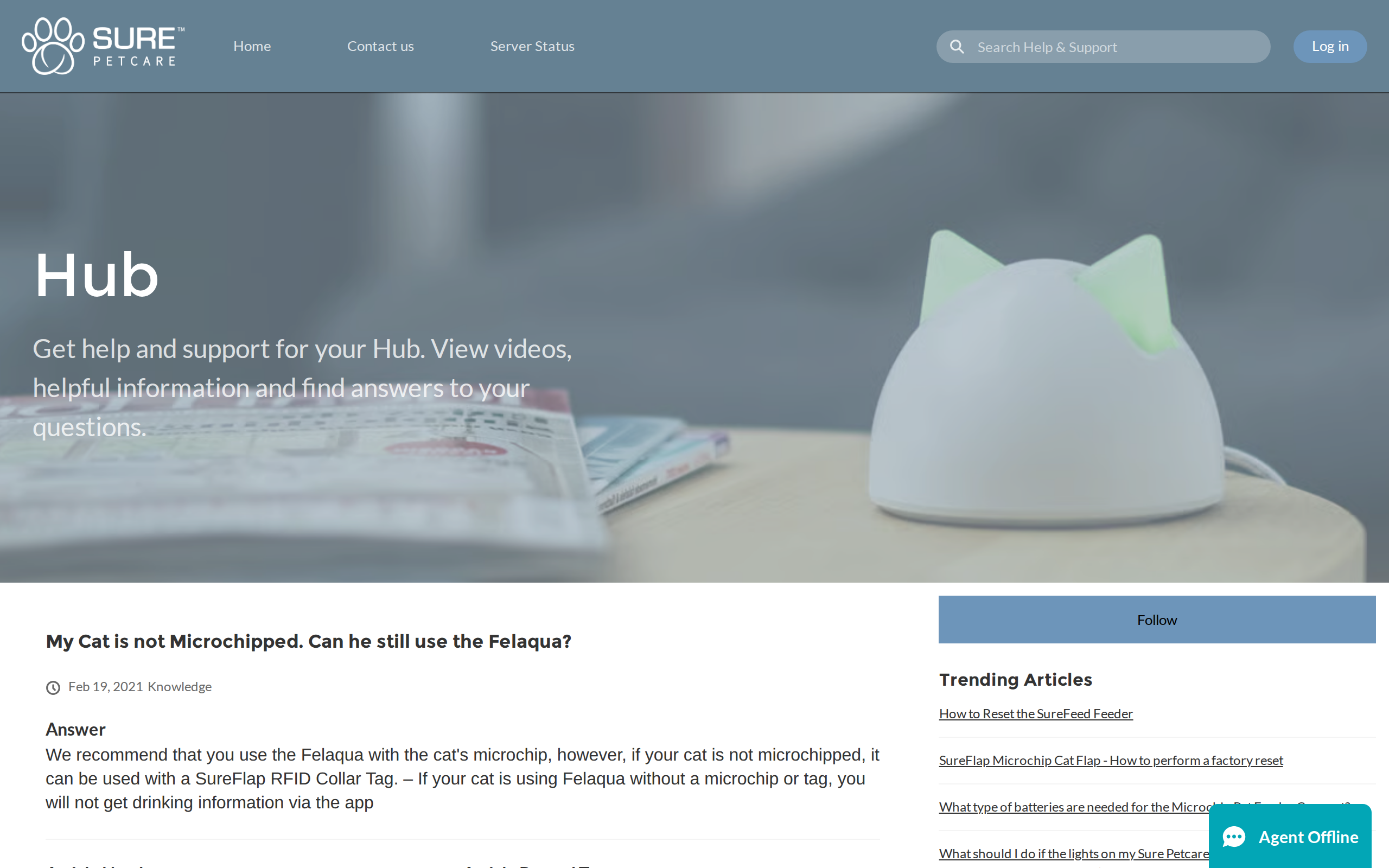
Power comes from four C cells, not included. Sure Petcare quotes about six months per set. C cells are less common than AA, but the trade is no cord, which most cat owners will accept. One owner reviewer with a kidney-disease cat, writing at Three Chatty Cats, found pairing with the microchip easy and noted that the hub is what adds the phone alerts.
Chips, collars and multi-cat homes
Microchip reading is what makes the data per cat. It also adds a failure mode. If the chip has migrated under the skin, reads will drop. Sure Petcare's support pages suggest a vet check, and a Sure Petcare RFID collar tag is the fallback. AVID and Trovan chips are not supported at all, so check which brand your cat has before you buy.
In a home with two or three cats, the per-cat log is the entire reason to choose this over a plain bowl and a measuring jug. In a single-cat home, a jug, a marker and a notepad get you most of the way for nothing.
How we would use it
The bowl pairs well with an existing vet relationship. Take the PDF in, ask what a normal range looks like for your cat's weight and age, and let the vet decide what the line means. We would not buy it to self-screen a healthy young cat, because a few weeks of readings will mostly record weather, diet changes and moods.
Who should buy it
Buy it if you have a senior cat, a cat with a known kidney or thyroid condition, or several cats where you need to know who is drinking. Skip it if you want a fountain, if you will not buy a hub, or if you hope a bowl can tell you your cat is healthy. It earns a middling-to-good score: strong at one narrow task, with a setup cost that keeps it from being a general recommendation.
What we liked, and what we did not
Pros
- Reads the microchip, so it logs drinking per cat in a multi-cat home
- Records time, frequency and volume per drink, not just a daily total
- Exports PDF reports you can hand to a vet
- Four C cells last about six months, and there is no cord to chew
Cons
- Needs the Sure Petcare Hub, which is sold separately and wants a router port
- Only sees water drunk from this bowl, so a tap or a second bowl breaks the data
- Cannot diagnose anything, and the maker publishes no clinical accuracy study
- AVID and Trovan microchips are not supported
- Static water in a 1 litre reservoir, with no filter or pump
Specifications
- Reservoir
- 1 litre (33.8 fl oz)
- Power
- 4 x C (LR14) cells, about 6 months (not included)
- Identification
- Microchip or Sure Petcare RFID collar tag
- Unsupported chips
- AVID and Trovan
- Connectivity
- Sure Petcare Hub required for the app
- Hub capacity
- Up to 10 Sure Petcare devices
- Size
- 10.4 in high, 11.1 in deep
- Warranty
- 2 years (1 year on bowl and reservoir)